
Government Grants Require a Different Readiness Check
Potentially larger awards can bring distinct application, cashflow, and reporting demands.
Since the grants landscape is chaotic right now, it is especially important for nonprofits to focus their time on opportunities where they are best positioned to succeed. Before applying, review the opportunity’s eligibility rules, payment method, reporting obligations, and staffing demands. Requirements vary by program and by the terms of the award.
Nonprofits sometimes approach government grants as they would foundation or corporate grants: submit an application, wait for a decision, manage the award, report on progress, and seek renewal. But federal and state grants can bring different application, administration, and reporting requirements. They may require more staff time than other institutional grants, and cash flow is an important consideration.
Do not assume every government award uses the same payment method. Federal awards may use advance payments, reimbursement, or a working capital advance, depending on applicable rules and award terms. State and local programs may have their own procedures. If an award reimburses costs after they are incurred, the organization needs a workable plan to cover expenses while it waits for payment. Confirm the method and timing before accepting an award.
Government awards may look attractive because of their potential size, multi-year terms, or the credibility they can bring. Those benefits should be weighed alongside the work involved. Depending on the opportunity, organizations may need detailed expense tracking, written financial controls, procurement records, time-and-effort documentation, and reports on program results. Review the funding notice, governing rules, and award terms to understand what will be required.
Some nonprofits add staff or consultants with government-grant experience to help manage compliance, documentation, reporting, and reimbursement processes. Others assign these responsibilities to existing staff. Either way, be realistic about the expertise and time required.
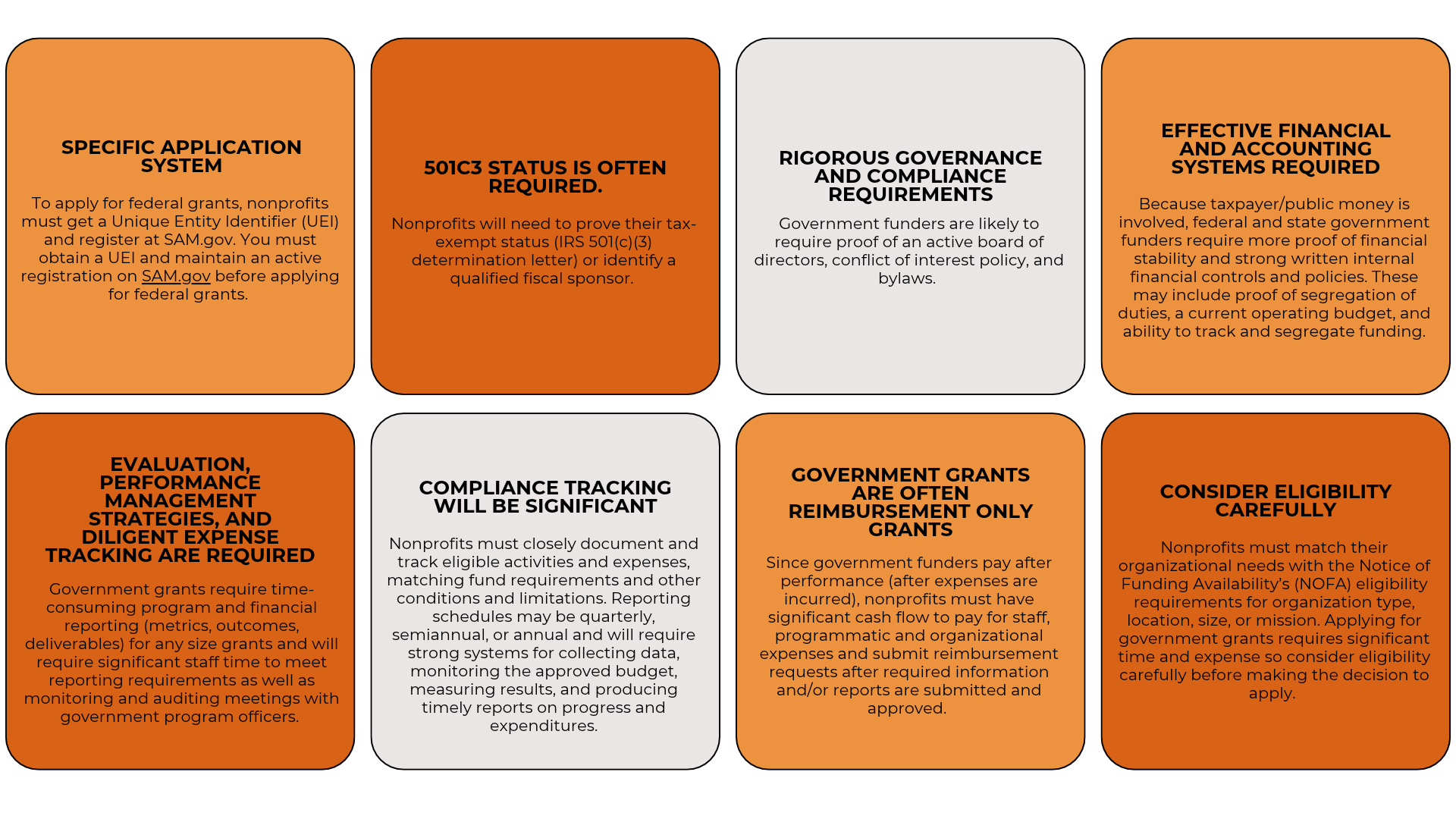
Other key considerations before pursuing government grants:
For some nonprofits thinking about a government grant strategy, it may be more strategic to build a track record and strengthen program delivery and reporting with foundation and corporate grants before pursuing government grants. Additionally, revenue diversification matters. A mix of individual and institutional support can help an organization respond when one funding stream changes. As funding priorities and available programs shift, readiness and a thoughtful funding strategy help leaders make informed choices about where to invest their time.
For an effective assessment of your nonprofit’s readiness, please use Governmental Grant Readiness Quick Diagnostic.